
How Hotels Keep Their Towels Bright White
18th October 2026
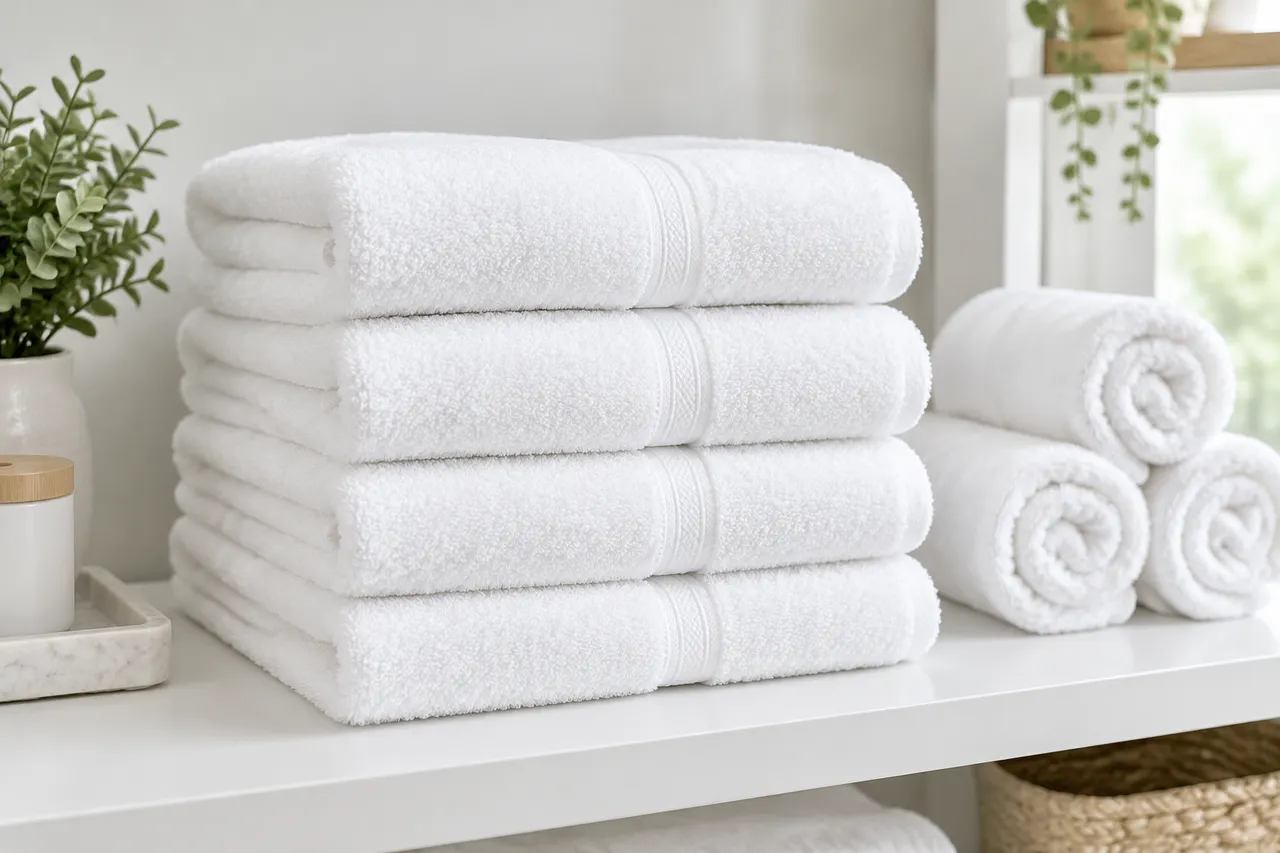
How Hotels Keep Their Towels Bright White
A stack of crisp, white, fluffy towels is one of the quiet signals that a hotel takes care seriously. Guests rarely think about it, but those towels may have been through the wash many times before they reach the bathroom shelf. At home, on the other hand, white towels often turn gray, feel stiff and stop absorbing water properly within a few months.
The difference is rarely down to luck or secret chemicals. Commercial laundries follow a handful of disciplined habits, and most of them can be copied at home. Here is why towels lose their brightness and softness, and what the professionals do to prevent it.
Why towels go gray or stiff
Detergent build-up
It sounds backwards, but using too much detergent is one of the most common reasons towels look dull. Cotton loops trap surplus detergent that the rinse cycle cannot fully remove. That residue attracts soil, holds on to body oils and leaves fibers feeling waxy or crunchy. Over time the towel takes on a grayish cast that no amount of extra detergent will fix, because extra detergent is the problem.
Hard water
In hard-water areas, calcium and magnesium minerals react with detergent and settle on fabric. The deposits stiffen the fibers, reduce absorbency and dull the color. They also make detergent less effective, which tempts people to add more, which makes build-up worse.
Overloading the machine
Towels are heavy and bulky when wet. A packed drum leaves no room for the load to tumble, so water and detergent cannot circulate through the fabric. Soil gets moved around rather than washed out, and rinsing is incomplete. The result is towels that come out looking clean-ish but slowly drift toward gray.
Fabric softener
Liquid fabric softener works by coating fibers with a thin, slippery film. On clothes that can feel pleasant, but on towels it is counterproductive. The coating repels water, so towels absorb less, and layers of softener hold on to residue and odors. Many people reach for softener because their towels feel harsh, without realizing that the harshness usually comes from residue in the first place.
Too much heat
High heat is hard on cotton. Very hot washes with the wrong chemistry can set stains, and long, hot tumble drying cycles over-dry the fibers, leaving them brittle and flat. Over-dried towels lose the springy pile that makes them feel thick, and scorched fibers can take on a yellowish tinge.
Mixing colors
A single red sock or a new navy towel in a white load releases dye that redeposits on everything else. Even mixing whites with pale colors can gradually transfer tint. Each wash adds a little more, so whites become dingy without any single obvious accident.
How commercial laundries prevent it
Correct dosing
Hotel and commercial laundries rarely guess at detergent quantities. Many use automatic dosing systems that pump measured amounts of chemistry into each wash based on the load weight, the soil level and the local water hardness. The goal is enough detergent to lift soil, and no more.
At home, the equivalent is simple: read the dosing guidance on the detergent pack, adjust for your water hardness and load size, and resist the urge to add “a bit extra”. If your towels already feel stiff, try cutting back the dose and see whether they soften over the next few washes.
The right water temperature
Professional laundries match water temperature to the fabric and the chemistry rather than defaulting to the hottest setting. A warm or hot wash helps detergent and oxygen-based whiteners work properly on cotton towels, while a thorough rinse removes loosened soil and residue.
At home, check the care label on your towels and use the warmest temperature it allows for regular washing of whites. Make sure the rinse is complete; an extra rinse cycle is a cheap way to clear residue, especially in hard-water areas. Where water is very hard, a water softener or a detergent formulated for hard water can make a noticeable difference.
Sorting, always
Commercial laundries sort strictly. Whites are washed with whites, colors with colors, and heavily soiled items are often separated from lightly used ones. Towels are also usually washed apart from items that shed lint or that need different settings.
At home:
Wash white towels only with other whites.
Keep new colored towels separate for their first several washes, as they tend to release the most dye early on.
Avoid washing towels with zipped or hooked garments that can snag the loops.
Do not overfill the drum. As a rule of thumb, you should be able to fit your hand in above the load before the wash starts.
Rotating stock
Hotels do not use the same handful of towels every day. They hold several sets per room, often described as “pars”, so that at any given time some towels are in use, some are in the laundry and some are resting on the shelf. Rotating stock spreads wear evenly, gives fibers time to recover between washes and makes it easy to spot towels that are reaching the end of their useful life.
The same idea works at home. Having two or three sets per person and using them in turn means no single towel is washed into exhaustion. When a towel is worn, thin or stained beyond rescue, retire it to cleaning-rag duty rather than letting it drag down the rest of the stack.
towels built for frequent laundering rather than ones designed mainly to look good on a store shelf.
Oxygen bleach instead of chlorine
Many commercial laundries rely on oxygen-based bleaching agents for whites. Oxygen bleach, usually based on sodium percarbonate or hydrogen peroxide, brightens and lifts organic stains while being gentler on cotton than chlorine bleach. Repeated chlorine use can weaken fibers and may cause yellowing over time, and it does not mix well with some other cleaning products.
At home, add oxygen bleach to the wash according to the pack instructions, or use it as a pre-soak for towels that have already lost their brightness. Always follow the manufacturer’s guidance on temperature and quantity, and never combine bleach products.
Drying with care
Professional drying is about control. Commercial dryers are set to remove moisture without baking the fabric, and towels are often taken out while still very slightly warm, then shaken out and folded. A cool-down phase at the end of the cycle reduces creasing and protects the fibers.
At home:
Shake each towel out before drying to lift the pile.
Use a medium heat setting rather than the highest one.
Do not over-dry. Remove towels as soon as they are dry.
Line-drying is fine, and sunlight has a mild natural brightening effect, but towels can feel firmer when dried completely still. A few minutes in a dryer afterwards, or a good shake, will soften them.
Wool dryer balls can help separate towels in the drum and improve airflow.
Rescuing towels that have already gone gray
If your towels are already dull and stiff, a “stripping” wash can often bring them back. Run a hot wash, within the care label’s limits, with no detergent at all to flush out built-up residue. Follow it with a normal wash using a correctly measured dose of detergent and oxygen bleach. Skip fabric softener entirely, and dry as described above. Some towels may need this treatment more than once. If they remain gray after several attempts, the fibers themselves may be worn, and it is time to retire them.
The bottom line
Hotels keep their towels white not with magic products but with consistency: measured detergent, sensible temperatures, strict sorting, no softener, rotation of stock and careful drying. Adopt those habits at home and your towels will look and feel closer to the ones you enjoy on vacation, and they will last longer too.
Sidebar: Caring for sheets the hotel way
The same principles apply to bed linen, with a few adjustments.
Wash regularly. Sheets collect body oils and perspiration that turn white cotton yellowish if left too long between washes.
Do not overload. Sheets need room to move. Wash a set at a time so they do not twist into a ball and trap soil.
Measure detergent and skip softener. Residue makes sheets feel less crisp and can dull the color.
Use oxygen bleach for whites. It helps keep cotton and cotton-blend sheets bright without the harshness of chlorine.
Dry gently and remove promptly. Taking sheets out while barely warm and folding or smoothing them straight away reduces creasing, which is how hotels get that crisp, pressed look with less ironing.
Rotate sets. Keeping at least two or three sets per bed spreads the wear and gives each set time to rest between washes.
Latest Blog Posts
What Clean Linens Say About Your Spa
Fresh towels and robes shape a guest's first impression. See how a dependable laundry routine helps New Jersey spas focus on guests.
29th September 2026
Who Actually Uses a Laundry Service? More People Than You Think
When people hear the words “laundry service,” they sometimes picture something fancy or unnecessary. The truth is a lot more ordinary.
25th August 2026
What Happens After We Pick Up Your Laundry? A Behind-the-Scenes Look at The Laundorist
When you schedule a laundry pickup, you probably enjoy the convenience of watching your laundry bag leave your doorstep and return a day later clean, fresh, and neatly folded.
7th August 2026
More Than Just a Chore: Why Accessible Laundry is a Lifeline for Homebound Individuals
For many, laundry is just another item on a Saturday to-do list. But for those navigating life while homebound—whether due to age, injury, chronic illness, or disability—the laundry room can start to feel like an insurmountable mountain.
21st April 2026
The Hidden Cost of Doing Laundry at Home (Time vs. Money)
Detergent and utilities are easy to measure. Your time isn’t. Discover the hidden cost of doing laundry at home and how reclaiming those lost hours can change the way you think about everyday chores.
12th February 2026